THIS POST MAY CONTAIN AFFILIATE LINKS.
It’s easy to find ourselves breathing only from the surface—short, tight inhales that stay high in the chest while the mind races two steps ahead. We’ve learned to treat this as background noise, forgetting that the breath is actually the most accessible act of mending we own.
What if the peace you’re searching for isn’t an hour away on a yoga mat, but is already resting just beneath your ribs?
When the world feels too loud and your nervous system feels unmoored, you don’t need a lifestyle overhaul. You need a rhythm of return. A few breathing techniques to calm nerves can act as a quiet tether, drawing you back to a place of steady calm.
These five-minute practices aren’t about mastering meditation; they are simple, physical ways to steady your pulse, quiet the inner noise, and finally give your body permission to soften.
The Science of the “Rest and Digest” Signal
When life feels overwhelming, your Sympathetic Nervous System — the “fight-or-flight” mode — takes over, speeding your heart rate and sending stress hormones rushing through your body.
To restore calm, we turn to the parasympathetic nervous system, often called the body’s “rest and digest” mode. By consciously guiding your breath — especially your exhale — you activate this natural reset button.
It’s your body’s built-in way to whisper, You are safe now.
You’re using your body’s own wisdom to practice quick calming breathing techniques and return to your inner steady ground.
💡 Research from the Harvard Health Publishing highlights how controlled breathing can activate the body’s relaxation response and help regulate stress.
Below, we’ll look at three gentle breathing techniques to calm nerves—simple, grounding rituals designed to help you regulate your nervous system whenever the world begins to feel a little too loud.
How Breathing Gently Teaches the Nervous System It’s Safe
Most of us don’t notice how often our bodies are bracing. Jaw tight. Shoulders lifted. Breath shallow. We move through the day without ever fully settling into it.
That’s not a failure. It’s a nervous system trying to keep up.
When stress lingers, the body stays on alert. Heart rate rises. Muscles stay tense. Thoughts speed ahead. Nervous system regulation isn’t about forcing calm — it’s about giving the body a clear signal that it’s safe to slow down.
This is where breathing techniques to calm nerves come in.
Slow, intentional breathing speaks directly to the body. When you lengthen your exhale or let the breath drop deeper into the belly, something shifts. The vagus nerve — which connects the brain to the heart, lungs, and gut — picks up the change. It carries a quiet message inward: you can soften now.
That’s why deep breathing exercises for stress often work when other tools don’t. You don’t have to think your way into calm. You feel your way there.
The signs are subtle at first:
- shoulders easing
- a natural sigh
- the room feeling quieter, even if nothing changed
This is the body moving back into rest-and-digest — where healing and emotional balance happen more easily.
Breathing for anxiety relief isn’t about stopping anxious thoughts. It’s about giving your nervous system something steady to hold onto while those thoughts pass through.
And the best part? It’s accessible. No special setup. No perfect focus. Just a few minutes of slower, deeper breaths. Over time, the body learns this rhythm. Calm becomes easier to return to.
The techniques below aren’t about fixing yourself. They’re gentle ways to remind your body that it doesn’t have to rush — and that calm is already within reach.
1. The 4-7-8 Breath: The Relaxation Brake
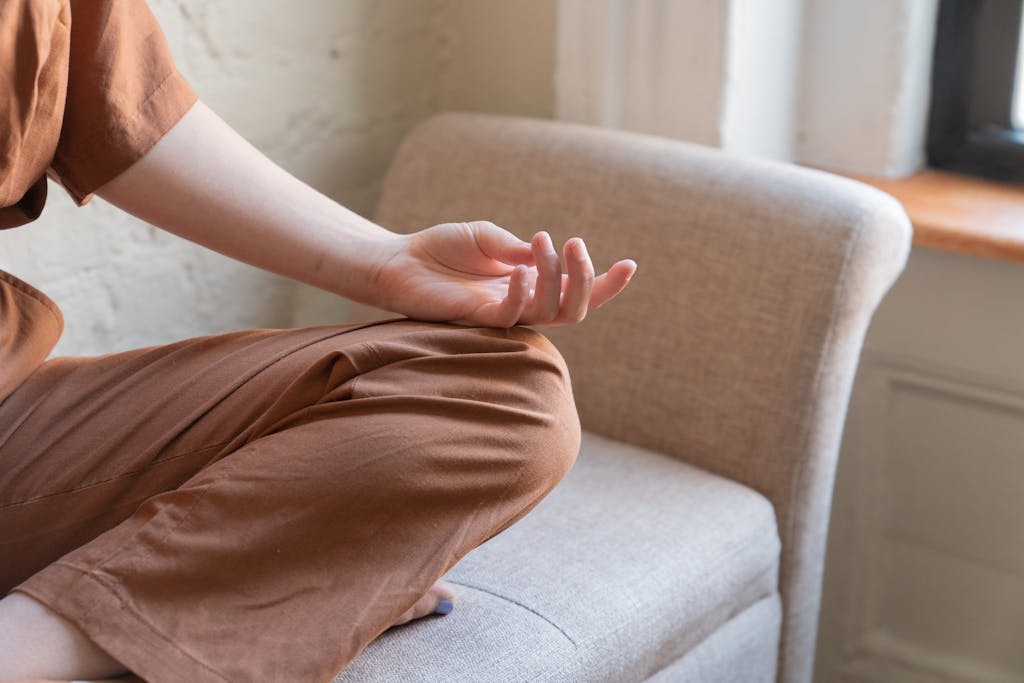
If you feel sudden panic, racing thoughts, or can’t fall asleep because of an endless to-do list, this guided breathing for anxiety relief is your immediate emergency brake.
It focuses on the extended exhale — one of the most effective deep breathing exercises for stress — to gently activate the vagus nerve and calm your body.
🎯 The 5-Minute Goal: De-escalate panic
The 4-7-8 method, popularized by Dr. Andrew Weil, is often called a “natural tranquilizer for the nervous system.” By extending the out-breath, you trigger your body’s relaxation response.
The Gentle Ratio:
- Inhale quietly through your nose for a count of 4.
- Hold your breath for a count of 7. (Keep this gentle—no straining.)
- Exhale completely through your mouth for a count of 8.
Repeat this cycle four times — that’s your two-minute reset.
💗 Soulful Insight:
This breathing technique proves you can change your state faster than you can change your circumstance. When your mind says go, your breath whispers pause.
(You can also explore 7 easy ways to calm your nervous system naturally if you’d like more support.)
2. Box Breathing: The Focus Stabilizer
Box Breathing (also called Square Breathing) brings profound balance. It’s used by Navy SEALs to maintain focus during high-stress situations.
For a busy mom like me, it’s the perfect 5-minute nervous system regulation to interrupt a scattered mind and restore clarity.
🎯 The 5-Minute Goal: Restore mental focus
This technique equalizes all four phases of breath, balancing oxygen and CO₂ levels. A Johns Hopkins Medicine research suggests it’s excellent for reducing stress while improving focus and emotional control.
The Gentle Ratio:
- Inhale through your nose for a count of 4.
- Hold (full) for 4.
- Exhale slowly for 4.
- Hold (empty) for 4.
Repeat for 3–5 minutes.
💗 Soulful Insight:
Box Breathing reminds your whole being that balance is always available. You’re simply giving your mind a rhythm to follow instead of the noise.
3. Alternate Nostril Breathing (Nadi Shodhana): The Balancing Tool
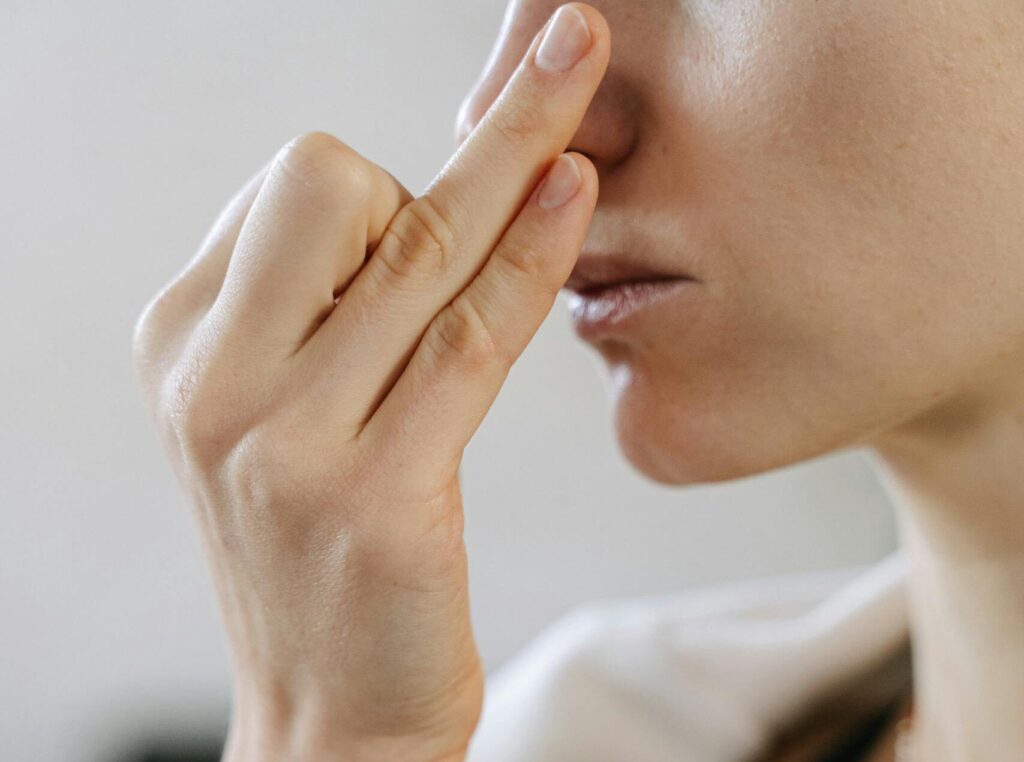
This ancient yogic technique — a pranayama practice — is a beautiful way to quiet the mind and balance the nervous system before sleep or meditation.
This gentle nervous system regulation breathing technique is believed to harmonize both hemispheres of the brain, promoting focus and calm.
🎯 The 5-Minute Goal: Achieve emotional balance
If you feel wired or overstimulated, this is your gentle deep breathing exercises for stress. A study published in Harvard Health suggest that five minutes of alternate nostril breathing can lower heart rate and ease stress by engaging the body’s natural calming response.
The Gentle Ratio:
- Sit comfortably and close your eyes.
- Use your right thumb to close your right nostril. Inhale through your left.
- Close your left nostril with your ring finger. Release your thumb and exhale through your right.
- Inhale through your right, close it, then exhale through your left.
Repeat this rotation for 3–5 minutes.
💗 Soulful Insight:
This practice reminds you that energy is always flowing, even when one path feels closed. This breathing for anxiety relief is a quiet rhythm that restores equilibrium to your whole being.
✨ Take Your Calm Further
If these practices felt like a breath of fresh air, I’d love to walk a little further with you.
Join the Free 5-Day Calm Reset—a quiet, heart-centered space where we’ll practice coming back to center, one day at a time. Together, we’ll spend a few minutes each day:
- Replacing the morning rush with a short, softening breath ritual.
- Finding ‘quiet pockets’ of peace in the middle of a busy schedule.
- Remembering how it feels to be at home in our own skin—no apps or equipment required.
Join the Free 5-Day Calm Reset →
🌿 Coming Home to Your Steady Ground
The next time the rush of the day begins to feel like a heavy weight, try choosing just one of these techniques to hold onto. Trust the quiet wisdom of your body, and allow yourself to return to your inner steady ground.
Every time you pause to breathe with awareness, you aren’t just taking in air—you are gently reminding your nervous system that it is finally safe to rest.
These small, intentional pauses aren’t meant to be a shield against the world; they are a bridge. They connect the racing mind back to the quiet body, helping you move through your chores and routines with a sense of steadiness instead of strain.
Remember, you don’t need a silent yoga studio or a weekend away to find your way back. Just five minutes of choosing yourself can change the entire landscape of your day. 💗
✨ If you’d love to bring the same sense of inner peace into your home, explore Minimalist Home Wellness: 7 Simple Routines for a Cozy Life — it’s a beautiful next step to extend what you’ve practiced here. You’ll learn how to create calm not just within your body, but in the spaces that hold you every day.
So breathe, dear one. You already hold the calm you’re searching for — right within you. 🌸
A Quick FAQ:
Do breathing techniques to calm nerves really work if I’m very stressed?
Yes — and especially then. When stress feels overwhelming, the nervous system often needs something physical, not mental. Slow breathing helps regulate your nervous system by signaling safety through the body. You don’t need to feel calm before you begin. The breath helps create calm as you go.
How quickly can breathing for anxiety relief make a difference?
Sometimes within minutes. A few slow, deep breaths can begin to ease tension right away by activating the vagus nerve. The effects may feel subtle at first — a softer chest, slower thoughts, less urgency — but with regular practice, these moments of calm become easier to access.